This Is The Best Time To Be In Business

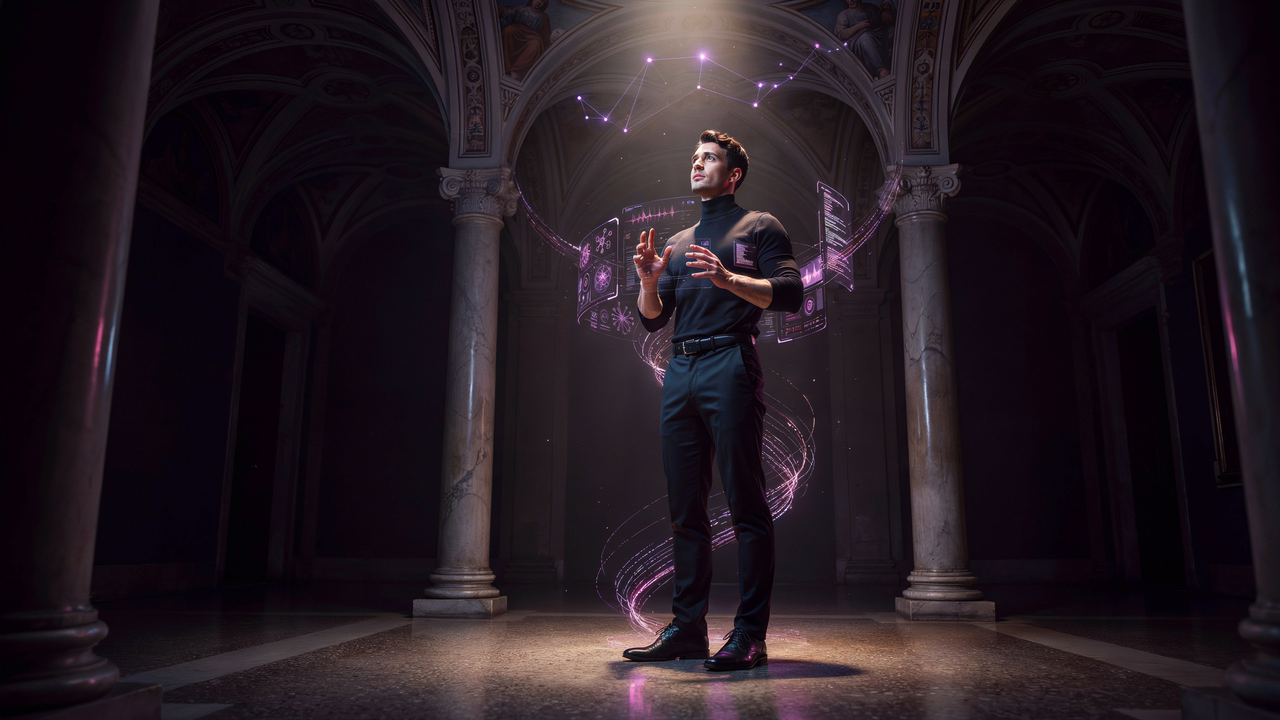
Read that again. Not despite everything. Because of everything.
I know how that lands right now. The headlines are heavy. The systems people trusted are groaning under their own weight. Costs are up, certainty is down, and a lot of good founders are quietly wondering if they mistimed their run. If that's you, stay with me for the next few minutes. I want to show you where you actually are — because I don't think you've been given the map.
We've been here before
Six hundred years ago, Europe was coming out of a long, controlled darkness. The Church held a thousand-year monopoly on knowledge. Most people couldn't read, couldn't question, couldn't access the ideas that would set them free. Then a few things cracked open at once. Gutenberg's printing press meant knowledge could travel horizontally — person to person — instead of staying locked in monastery libraries. Suppressed wisdom resurfaced. Scholars started studying the world directly instead of accepting doctrine. Artists dissected bodies to understand anatomy. Scientists pointed telescopes at a sky they'd been told not to examine.
They called it the Renaissance. A rebirth. And it produced Leonardo, Michelangelo, Galileo, Botticelli — names we still say five centuries later.
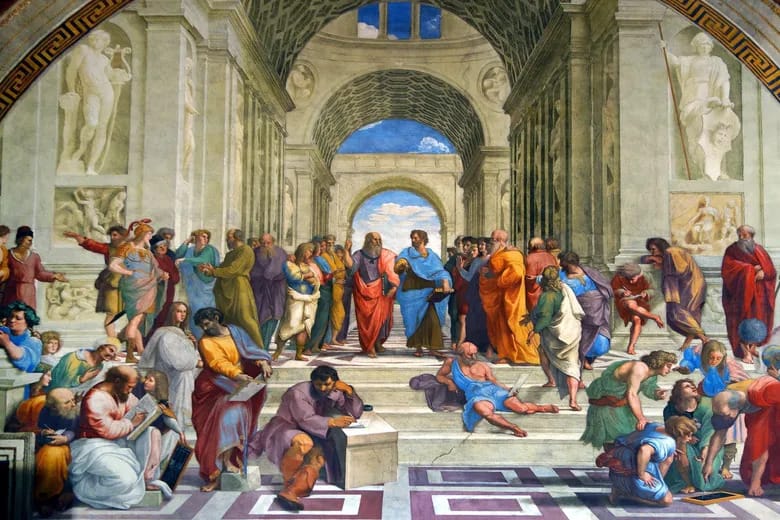
Here's the part that matters for you: those people didn't create in comfortable, stable times. They created inside plague, political chaos, collapsing institutions, and an old order fighting viciously to hold its grip. The turbulence wasn't the obstacle to their greatness. It was the soil of it. The gatekeeping was breaking, and the ones who moved while everyone else froze became the ones we remember.
Look at the parallel
Now look at us.
Information no longer flows down from a few gatekeepers — it moves peer to peer, instantly, globally. Knowledge that once took a scholar a lifetime to find sits in your pocket. Technology has torn open every barrier to building, publishing, and reaching people. There's a mass awakening underway — more people questioning defaults, reclaiming authority, seeking alignment over autopilot. And all of it is being accelerated by AI at a speed the first Renaissance couldn't have dreamed of. When quantum computing arrives, it compounds again.
This is Renaissance 2.0. Same pattern. Same breaking of the old monopolies. The only difference is speed — what took three centuries then is happening in years now. That's why it feels like chaos. The technology has already shifted. Consciousness is still catching up. And the gap between the two is exactly where the opportunity lives.
The printing press, then AI
If you want to understand what AI actually is right now, look at the printing press.
Before Gutenberg, a book had to be copied by hand — one scribe, one page at a time, months of labor locked behind monastery walls. Knowledge was scarce because making it was scarce. Whoever controlled the copying controlled the truth. The press shattered that in a single generation. Suddenly one person could reach thousands. Ideas that were once whispered could now be printed, spread, and defended. It didn't just distribute knowledge — it dissolved the monopoly on who was allowed to produce it.
AI is that same lever, pulled again — except the press multiplied your reach, and AI multiplies your capacity. The press let one voice travel further. AI lets one founder think, build, write, design, analyze, and ship like a team of fifty. The scarcity it breaks isn't the cost of copying a page — it's the cost of expertise itself. The knowledge that used to be gated behind agencies, credentials, and payroll is now a conversation away.
Sit with what that means. For five hundred years, leverage belonged to whoever could afford the biggest team, the deepest bench, the most specialists. That moat just drained. A solo founder with clear vision and the right tools can now move at a scale that used to require a company. The gatekeepers who priced you out of your own growth are watching their advantage evaporate in real time — exactly as the scribes watched the press.
The printing press made the first Renaissance possible. AI is making this one inevitable. The only question is whether you pick up the tool while it's still early — or wait until everyone has.
The one lesson the Medici teach us
The Medici bankrolled much of the Renaissance. They funded the artists, commissioned the works, patronized the geniuses. Brilliant — and instructive. Because in the end, the creators of that era did something we can't afford to repeat: they poured their energy, genius, and productivity right back into the systems that consolidated power for their own use. They proved the old order was wrong. They didn't build a new one to replace it. So the institutions adapted, absorbed the new tools, and reasserted control. The printing press meant to liberate got weaponized for propaganda. The rebellion got captured.
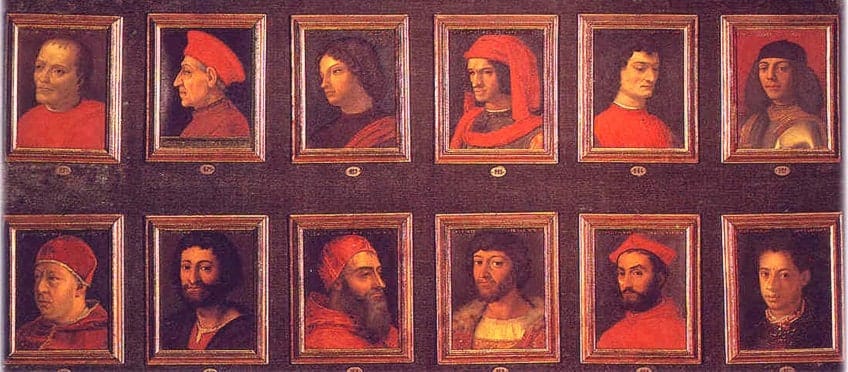
We have the chance to get it right this time. Not by rejecting the Renaissance pattern — by repeating it, and building the parallel infrastructure as we go, so the energy you generate compounds for you, your people, and your mission instead of flowing back into a system that consolidates it away from you.
That's the whole game. Where does your energy go when you succeed?
Growth is a season, not a grind
Here's the reframe most people miss, and it's the one that will save you.
The average person doesn't like change. They prefer comfort, consistency, predictability. But growth requires change — and that's precisely why the average stays average. They optimize for staying the same in a moment that rewards those willing to move.
And yet — growth was never meant to be a constant, grinding season. Look at a tree. It flowers and spreads pollen in spring, and pushes hard in summer when the light is long. Then it rests through fall and winter. It doesn't apologize for the rest. It doesn't burn its roots trying to bloom in January. The rest is how it grows.
This is where legacy businesses got it wrong. Hustle culture. Revenue-chasing at any cost. Team burnout as a badge of honor. We were conditioned by a system that's now collapsing under its own weight — because that behavior was never sustainable. You're not failing when the old model stops working for you. You're witnessing the old model fail.
So — what now?
You don't need the whole world to see the pattern. You never did. The Renaissance didn't wait for a majority. It moved through a critical mass of people who recognized the moment and acted while others waited for permission that was never coming.
That's the invitation. Not to hustle harder. To see clearly. To recognize that you are standing inside one of the most pivotal openings in human history, that the conditions producing your discomfort are the same conditions that forged everyone we now call a legend, and that the only real question is whether you'll move consciously — or wait for the moment to pass.
The gatekeeping is breaking. The tools are in your hands. The soil is ready.
This really is the best time to be in business. I just wanted to make sure you could see it too.
And we're not just saying it — we're building it.
We just launched our own sovereign platform, EPIQ Life — built from the ground up by us and our AI. It's where forward-thinking founders come together to trade ideas, get help, and birth the new. This is the parallel infrastructure I've been talking about, made real.
Come join us. Look for EPIQ Business in the Communities tab.
Grand rising,
Peter Luis Venero
Founder, Creatiq